
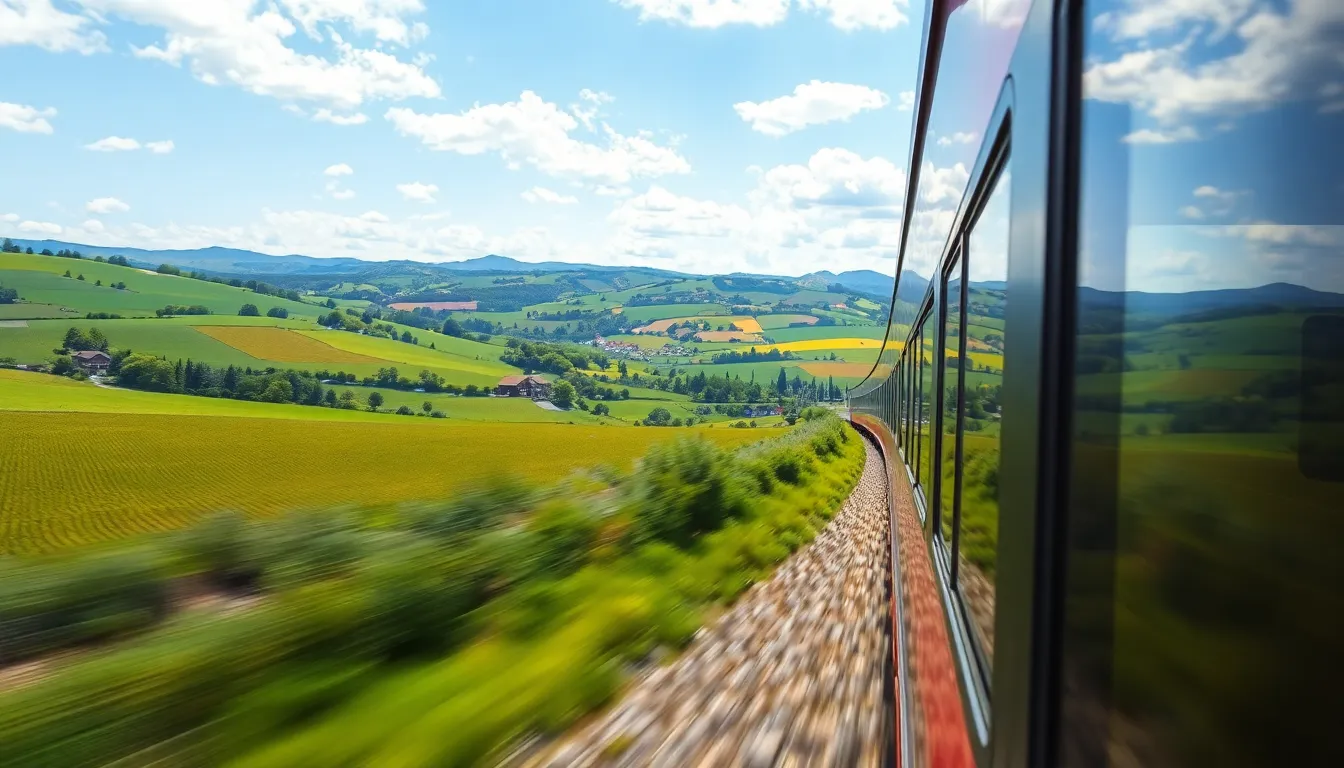
Traveling across Europe by train is like stepping into a real-life postcard. Imagine gliding through picturesque landscapes as charming villages and majestic mountains whiz by your window. It’s not just about the destination; it’s about the journey, and there’s no better way to experience Europe’s beauty than from the comfort of a train seat.
Forget the hassle of airport security lines and cramped buses. Trains offer a stress-free adventure where you can sip coffee, read a book, or simply watch the world go by. With efficient schedules and breathtaking routes, train travel transforms every trip into a memorable experience. So grab your ticket and embark on a journey that promises both excitement and a touch of European flair.
Overview of European Travel by Train
Traveling across Europe by train offers convenience, comfort, and stunning scenery. Trains present a unique opportunity to experience cities while avoiding the hassles often found at airports and bus stations.
Benefits of Traveling by Train
Traveling by train provides several advantages. Passengers enjoy spacious seating and the ability to move around freely during the journey. Scenery unfolds beautifully through the windows, showcasing Europe’s diverse landscapes. Connectivity between major cities is often faster and more efficient by train, allowing travelers to maximize their time exploring. Additionally, train stations are usually located in city centers, facilitating easy access to attractions and accommodations.
Popular Train Routes in Europe
Several train routes stand out in Europe for their scenic beauty and convenience. The Eurostar connects London to Paris and Brussels, offering a quick journey through the Channel Tunnel. The scenic Glacier Express runs between Zermatt and St. Moritz in Switzerland, revealing breathtaking mountain views. Another iconic route is the Orient Express, connecting Paris to Istanbul, which provides a luxurious experience steeped in history. The TGV connects Paris to multiple destinations, providing high-speed travel across France. Each route enhances the overall journey, allowing travelers to experience Europe’s rich culture and landscape.
Tips for Planning Your Train Journey
Planning a train journey across Europe involves a few key considerations for a smooth experience. These tips provide the necessary guidance to navigate booking and train selection effectively.
Booking Tickets and Passes
Book tickets well in advance to secure the best prices and seat options. Various passes like the Eurail Pass offer unlimited travel across multiple countries, appealing to frequent travelers. Many rail companies provide online booking services, allowing users to compare prices and schedules easily. Look for discounts, especially for youth, seniors, or groups, which can significantly lower travel costs. Utilizing mobile apps enhances convenience, enabling ticket purchases on the go and providing real-time updates on train statuses.
Choosing the Right Train Type
Identify the most suitable train type based on travel needs and itinerary. High-speed trains, such as TGV or Eurostar, cater to travelers prioritizing quick journeys between major cities. Regional trains serve smaller towns, offering a scenic view of the countryside and a more leisurely experience. Overnight trains provide comfort and save a night’s accommodation cost while travelling between cities. Luxury trains like the Orient Express present an exceptional travel experience, combining opulence with stunning landscapes. Compare the amenities and travel durations to select the best fit.
Scenic Train Journeys Across Europe
Traveling by train through Europe offers breathtaking views and unforgettable experiences. Various scenic routes capture the continent’s diverse landscapes and charm.
The Glacier Express in Switzerland
The Glacier Express stands out as one of the most iconic train journeys in Switzerland. Passengers enjoy stunning vistas of the Swiss Alps while traversing the route between Zermatt and St. Moritz. This eight-hour journey boasts panoramic windows, providing clear views of majestic mountains, deep valleys, and quaint villages. Additionally, the route features 91 tunnels and 291 bridges, showcasing remarkable engineering. Travelers can relish onboard dining while soaking in the scenery, making this train experience truly unforgettable.
The Darjeeling Himalayan Railway
Though primarily located in India, the Darjeeling Himalayan Railway also deserves mention due to its charm and historical significance. Known as the “Toy Train,” it operates between New Jalpaiguri and Darjeeling, climbing through picturesque tea gardens and dense forests. This UNESCO World Heritage site delights passengers with its narrow gauge and vintage steam locomotives. Additionally, passengers can witness local culture and the vibrant lifestyle of nearby communities along the route. Scenic viewpoints on this journey reveal stunning panoramas, showcasing the beauty of the Himalayas.
Sustainable Aspects of Train Travel
Train travel in Europe stands out as an environmentally friendly choice. It produces lower carbon emissions compared to cars and planes. Statistics show that trains emit approximately 70% less carbon dioxide per passenger compared to aviation. Public transportation like trains reduces road congestion, leading to fewer vehicle emissions in urban areas.
Energy-efficient technologies enhance modern trains. Many European trains utilize renewable energy sources, such as wind and solar power. These advancements contribute to reducing the overall environmental impact of train travel. Countries such as Sweden and Germany prioritize investments in sustainable rail infrastructure. This commitment reflects a broader trend toward eco-friendly travel across the continent.
Train systems contribute to local economies while promoting sustainability. Passengers often choose scenic routes, which boost tourism in rural areas. Increased travel to less commercial regions generates economic benefits, encouraging the preservation of natural landscapes and cultural heritage. Sustainable rail service providers uphold environmental standards, ensuring they minimize waste and promote recycling.
Traveling by train also allows passengers to appreciate nature directly. Scenic routes, like the Glacier Express, provide stunning vistas of untouched landscapes. Passengers can engage in eco-tourism by exploring wildlife and natural parks easily accessible via train. This immersive experience fosters a deeper appreciation for the environment.
Several government initiatives support sustainable train travel. Investments in rail infrastructure directly influence timeliness and efficiency. European nations promote policies incentivizing individuals to choose trains over less sustainable modes of transport. Embracing train travel aligns perfectly with the growing trend of eco-conscious travel in today’s world.
Traveling by train in Europe offers an unparalleled experience filled with scenic beauty and comfort. With the ability to relax and enjoy the journey while effortlessly accessing city centers, it’s a choice that enhances any adventure. The convenience of modern train services makes planning easier than ever, allowing travelers to embrace spontaneity or stick to a well-crafted itinerary.
As the world shifts towards more sustainable travel options, trains stand out as a responsible choice. By opting for train travel, individuals contribute to reducing their carbon footprint while exploring diverse landscapes and cultures. Whether for a quick getaway or an extended journey, the allure of European train travel continues to captivate wanderers, promising unforgettable memories along the way.