
Stretching exercises might not be the first thing that comes to mind when thinking about fitness, but they’re the unsung heroes of any workout routine. Imagine trying to drive a car with a rusty engine—without proper stretching, that’s your body! Stretching not only improves flexibility but also helps prevent injuries and keeps muscles happy.
What Are Stretching Exercises?
Stretching exercises involve elongating muscles and tendons for increased flexibility and range of motion. They’re essential for maintaining physical health and enhancing overall performance in various activities.
Different Types of Stretching
Static stretching targets specific muscle groups. This type involves holding a stretch for a prolonged period, typically 15 to 60 seconds. Dynamic stretching engages muscle groups while moving, which prepares them for activity. PNF (Proprioceptive Neuromuscular Facilitation) stretching uses contraction and relaxation techniques for greater flexibility. Benefits seen in all types include improved muscular coordination and reduced muscle stiffness.
Benefits of Stretching Exercises
Stretching exercises enhance flexibility, which leads to better athletic performance. Regular practice reduces the risk of injuries by preparing muscles for strain. Stretching also increases blood flow and nutrient supply to muscles, promoting faster recovery. Improved posture often results from consistent stretching routines. Mental benefits include stress reduction and increased relaxation, contributing to overall well-being.
How to Perform Stretching Exercises Safely
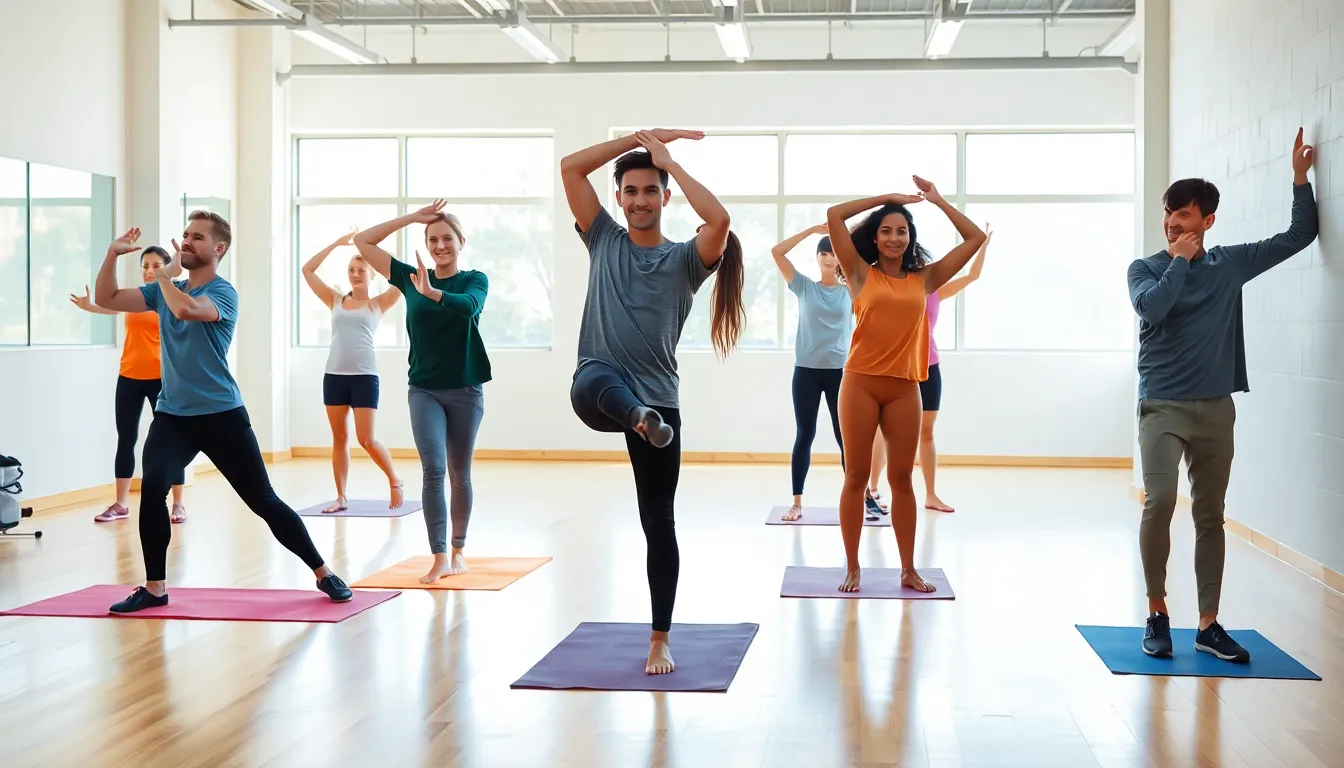
Performing stretching exercises safely ensures maximum benefits and minimizes injury risk. Understanding common pitfalls and following effective guidelines enhances the stretching experience.
Common Mistakes to Avoid
Skipping warm-up stretches can lead to muscle strain. Many individuals rush through their routines, neglecting proper techniques. Overstretching often results from pushing too hard for flexibility goals. Ignoring the body’s signals may cause discomfort or injury. Holding stretches for too long can create tension rather than alleviating it. Practicing without proper technique can diminish the effects of stretching.
Guidelines for Effective Stretching
Focus on consistency to achieve the best results. Incorporate stretching into daily routines, especially before and after workouts. Hold each stretch for 15-30 seconds to optimize muscle relaxation. Perform stretches gently, avoiding bouncing motions to prevent injury. Breathe deeply and steadily to enhance relaxation and oxygen flow. Target all major muscle groups to maintain balanced flexibility. Adjust the intensity according to personal comfort levels and physical limitations.
Stretching Exercises for Different Goals
Stretching exercises serve various fitness objectives, tailoring routines to meet specific needs. Focusing on flexibility and injury prevention proves essential for achieving optimal performance.
Stretching for Flexibility
Flexibility improves athletic performance and daily movements. Static stretches, such as hamstring and quadriceps stretches, promote lengthening of muscles. These exercises enhance range of motion and support joint health. Incorporating dynamic stretches before workouts boosts blood flow and prepares muscles for action. Aim for a consistent routine that includes stretches targeting all major muscle groups. Holding each stretch for 15 to 30 seconds ensures effective elongation without causing strain.
Stretching for Injury Prevention
Injury prevention plays a critical role in maintaining an active lifestyle. Stretching helps reduce muscle stiffness and increases flexibility, which lowers the risk of strains and sprains. Focus on major muscle groups, particularly those engaged during workouts. Gradual stretching, rather than overstretching, proves beneficial for preventing injuries. Pay attention to body signals during routines; if discomfort occurs, adjust intensity accordingly. Regular stretching enhances recovery and improves overall mobility, supporting long-term physical health.
Incorporating Stretching into Your Routine
Integrating stretching into a daily routine enhances flexibility and supports overall health. Finding the right moments to stretch proves essential for maximizing benefits.
Best Times to Stretch
Morning sessions can awaken muscles and increase flexibility for daily activities. Pre-workout stretching prepares the body for physical exertion, promoting blood flow. Post-workout stretches are crucial for recovery, helping muscles relax after exertion. Evening stretches offer a calming routine, aiding in stress relief and improved sleep quality. Listening to the body’s signals guides when to stretch, ensuring optimal results.
Creating a Stretching Schedule
Establishing a consistent stretching schedule promotes long-term flexibility. Aim for at least three to four times a week for effective results. Each session should include stretches for major muscle groups, like hamstrings, quadriceps, and back muscles. Allocate 10 to 15 minutes per session to hold stretches for 15 to 30 seconds. Adjusting the schedule according to fitness goals or training days ensures balanced flexibility. Consistently tracking progress also encourages commitment and enhances muscle health.
Embracing stretching exercises is vital for anyone looking to enhance their fitness journey. By incorporating these movements into a regular routine, individuals can experience significant improvements in flexibility and overall muscle health. The benefits extend beyond physical performance; stretching also plays a crucial role in mental well-being by promoting relaxation and reducing stress levels.
Establishing a consistent stretching schedule tailored to personal goals ensures optimal results. Whether it’s morning stretches to energize or post-workout routines for recovery, finding the right times to stretch can make a considerable difference. With dedication and attention to body signals, anyone can enjoy the long-term advantages of a well-rounded stretching practice.